A print campaign becomes more complicated the moment it needs to reach multiple stores, offices, venues or community sites. The artwork may look the same at first glance, but quantities, delivery details, installation needs and local information can vary from one destination to the next.
The best way to keep the campaign under control is to treat it as a coordinated rollout rather than one large print order. That means planning the variations before artwork is finalised and giving every item, site and delivery a clear reference.
Start with a campaign matrix
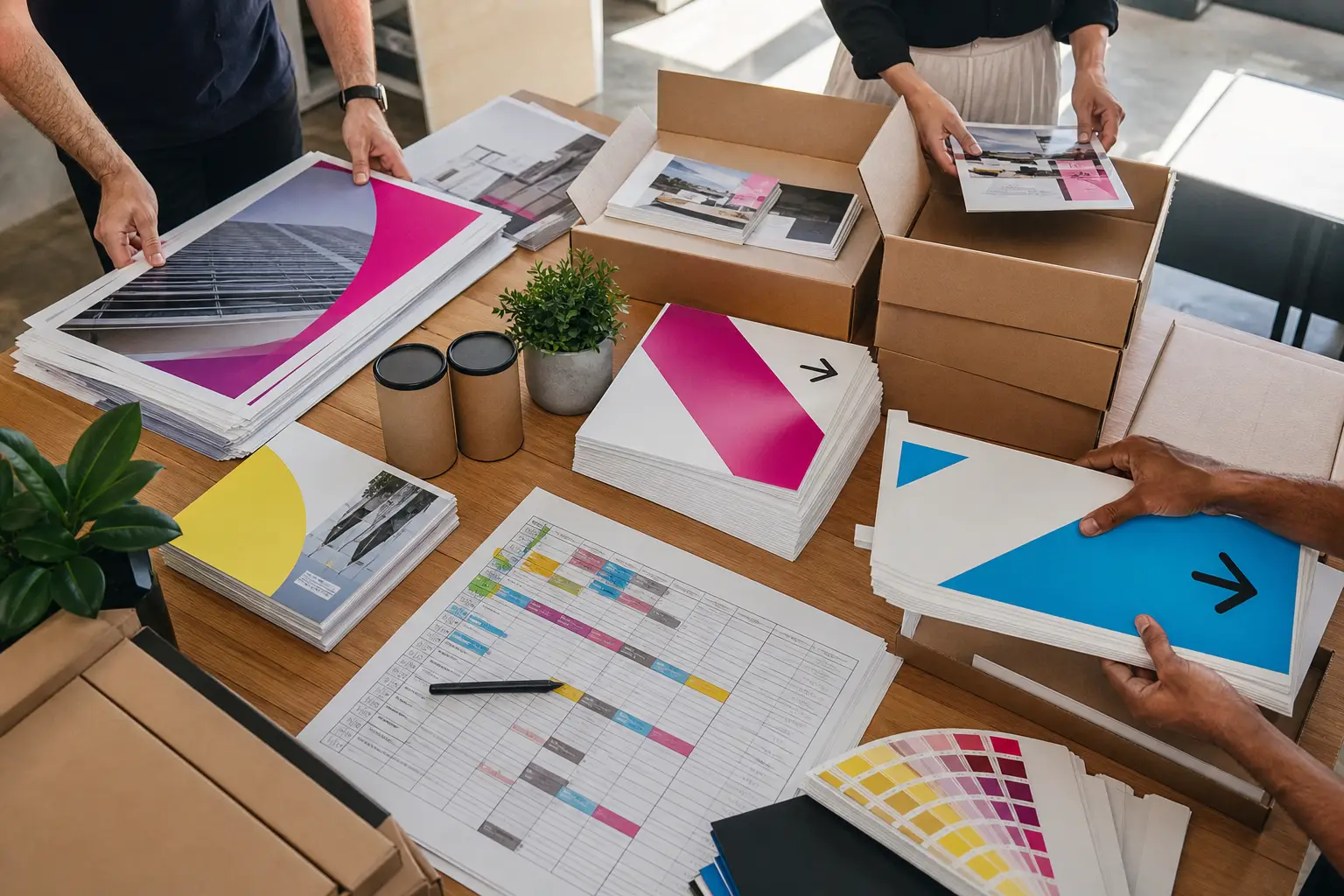
A campaign matrix is a single working document that shows what is being produced, where it is going and what changes between locations. It can be a spreadsheet, but it needs to be easy for your internal team, designer and production partner to understand.
Give each location a unique site code, even if you only have a handful of destinations. Site codes are more reliable than informal descriptions such as “the city branch” or “the hall near the station”.
For each location, record:
- Site name and code: Use the same naming convention across artwork, proofs, cartons and delivery records.
- Delivery address: Include the business name, building details, loading access and any instructions needed by the carrier.
- On-site contact: Add a name and phone number for someone who will be available when the delivery arrives.
- Required products: List every poster, banner, sign, brochure, name badge or promotional item needed at that site.
- Quantity by product: Avoid placing quantities in email threads where later changes can be missed.
- Local variations: Note different dates, phone numbers, QR codes, offers, opening hours or event details.
- Required delivery date: Distinguish between the campaign launch date and the date materials must be on site.
This document should become the central reference for the job. If a quantity or address changes, update the matrix rather than relying on separate messages to explain the revision.
Separate fixed content from variable content
Many multi-location campaigns use a common design with a small number of local changes. Before creating every version, identify which elements are fixed and which are variable.
Fixed content might include the brand colours, campaign headline, main imagery and standard terms. Variable content could include a branch address, local contact, event date or location-specific QR code.
This distinction helps the designer build a controlled master file. It also reduces the risk of an older logo, incorrect font or outdated campaign message appearing in one local version.
Be especially careful with QR codes
QR codes can look almost identical while sending people to completely different destinations. Give each code a descriptive file name linked to the relevant site code, then test it from the final proof rather than only testing the original supplied image.
If the code directs users to a page that is not live yet, arrange a suitable testing method before approving the artwork. A printed piece should not be the first place the finished link is checked.
Use a clear version naming system
File names such as “poster final”, “poster final new” and “poster final latest” are a warning sign. They make it difficult to confirm which artwork has actually been approved.
A practical file name can include:
- Campaign name
- Product or format
- Site code
- Version number
- Approval status
For example, a file structure might read “WinterCampaign_A3Poster_BNE02_V3_APPROVED”. The exact format matters less than using it consistently.
Only one person or a clearly nominated group should have authority to approve final artwork. When feedback comes from several departments, consolidate it before sending revisions to the designer or printer. Conflicting comments slow down production and make mistakes more likely.
Proof the campaign in two stages
A strong proofing process checks both the master design and every local variation.
- Approve the master design: Check layout, colours, hierarchy, image quality, trim area and standard wording before multiplying the artwork across locations.
- Approve the variable data: Review each site version against the campaign matrix, paying close attention to addresses, dates, contact details, quantities and QR codes.
Do not assume that a minor text change cannot affect the design. A longer suburb name may wrap onto another line, while a different date can change spacing. Each version needs a visual check, not just a data check.
A useful proofing habit is to read local details backwards through the campaign matrix, starting with the last site. It helps prevent the eye from simply skimming repeated layouts.
Plan how each location will receive the material
Production is only part of the job. The person opening the delivery should be able to tell immediately what has arrived and where it belongs.
Consider packing each location as its own kit. A retail kit might contain window posters, counter cards, staff handouts and promotional merchandise in one clearly identified consignment. An event kit could group directional signage separately from registration materials so the setup team can find urgent items first.
Useful packing instructions may include:
- Pack by site code rather than by product type.
- Mark the number of cartons in each consignment.
- Place an item checklist inside the main carton.
- Identify any boxes that must be opened first.
- Keep installation hardware with the matching signage.
- Avoid mixing spare stock with location-specific material unless it is clearly labelled.
If items are being delivered directly to venues, confirm whether there are restricted delivery times, loading dock requirements or periods when the site is unattended. These details are easy to overlook when the person organising the campaign is not based at the destination.
Build the schedule backwards from installation
The campaign launch date is not the production deadline. Materials may need to arrive early enough for site teams to check deliveries, report missing items, assemble displays and install signage.
Work backwards through the required steps: installation, delivery, packing, production, proof approval, artwork revisions and initial briefing. Allow extra decision time when multiple people must approve the job or when local information is still being collected.
It is also worth identifying which items are essential for launch and which are supporting materials. If the schedule changes, this helps the team make sensible production decisions instead of treating every item as equally urgent.
Check these details before releasing the order
- Does every site have a unique and consistently used code?
- Do the artwork versions match the latest campaign matrix?
- Have all QR codes, phone numbers, dates and addresses been checked?
- Are quantities recorded by both product and destination?
- Is there one confirmed approval contact?
- Are delivery contacts and access instructions complete?
- Do packing instructions reflect how each site will use the material?
- Is there enough time for delivery, checking and installation before launch?
All Aces Printing supports Australian organisations from concept and design through production and delivery, with more than 20 years of experience and production capability in every state. For a multi-location campaign, involving the print team early can help identify artwork variations, packing requirements and delivery details before they become last-minute problems.
A well-run rollout is not only about producing good-looking material. It is about making sure the right material reaches the right place, in a form that is easy for the receiving team to use.
Talk to the All Aces team about your next project Get in touch with us.