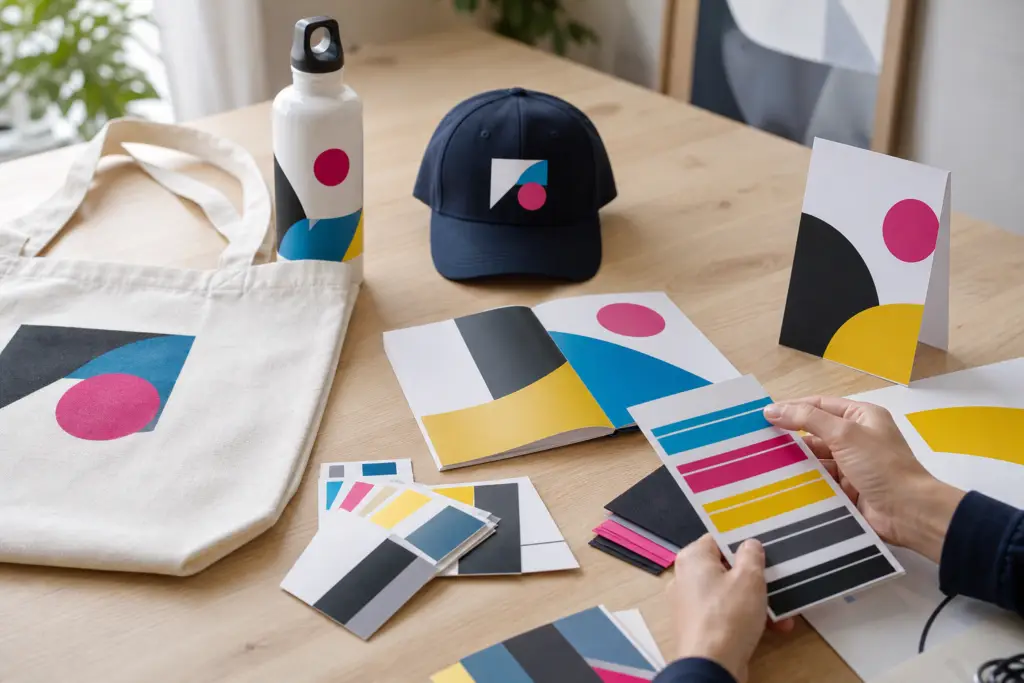

A brand can look polished in a style guide and still feel inconsistent when customers encounter it. The problem is often not the logo. It is the faded reception sign, the old brochure still being handed out, the event banner with last year’s message or the packaging label that is difficult to read.
September is a useful time for Australian organisations to check these physical brand touchpoints. There is enough distance from the start of the year to see what has become worn or outdated, while upcoming events, seasonal campaigns and end-of-year activity make improvements commercially relevant.
The goal is not to replace everything. It is to identify the items that affect recognition, trust and customer experience, then update them in a sensible order.
Audit the customer journey, not just the stationery cupboard
Start by following the path a customer, visitor or event attendee takes through your business. Looking at branding in context makes problems easier to spot than reviewing individual items at a desk.
How people find you
- Building and roadside signage
- Window graphics and opening information
- Directional signs in car parks, foyers or shared buildings
- Vehicle graphics used by customer-facing teams
- Flags, banners and portable signs used at events
Check whether each item is visible from the distance and direction in which people actually approach it. A sign can be beautifully designed but ineffective if the lettering is too small, the contrast is poor or another object blocks the view.
How people meet you
- Reception and counter signage
- Staff name badges or branded apparel
- Business cards and appointment cards
- Presentation folders, capability documents and sales sheets
- Forms, quote templates and printed information packs
These items should feel like they belong to the same organisation, but they do not need to be identical. A premium presentation folder and a practical warehouse sign serve different purposes. Consistency comes from shared brand cues such as colour, type, imagery and tone.
What customers take away
- Packaging, labels and swing tags
- Instructions, care cards and warranty information
- Receipts, referral cards and follow-up material
- Promotional products and event giveaways
- Thank-you cards and seasonal gifts
Take-away items often remain in a customer’s home, office, vehicle or bag. That gives them a longer working life than a display seen briefly, so outdated contact details or poor-quality artwork can linger as well.
Use three tests to decide what needs attention
Once you have photographed or collected the touchpoints, assess each one against three practical questions.
1. Is it recognisable?
Look for incorrect colours, distorted logos, mismatched typefaces and imagery that no longer reflects the business. Pay particular attention to items created quickly by different teams or suppliers.
Recognition is not about putting a large logo on everything. A strong item may use colour, layout and language to signal the brand before the logo is noticed.
2. Is it still relevant?
Check phone numbers, addresses, web details, services, staff information, calls to action and product claims. Also ask whether the message still suits what customers need from the item.
For example, an event banner promoting a broad list of services may be less useful than one clear message that can be understood while someone walks past. A brochure may need fewer generic statements and more practical information about the next step.
3. Is it easy to use?
Branding should support the task rather than get in its way. Check whether forms have enough writing space, signs can be read quickly, labels remain legible at their finished size and promotional products are suitable for the intended setting.
Usability problems are often production problems in disguise. Small text, unsuitable finishes, weak contrast and incorrect sizing can all reduce the value of otherwise sound artwork.
Refresh, replace or leave alone?
A brand check does not have to become a full rebrand. Sort each touchpoint into one of three groups:
- Keep: Accurate, functional and in good condition.
- Refresh: Fundamentally useful but needing updated copy, artwork, imagery or specifications.
- Replace: Damaged, misleading, difficult to use or no longer suited to the business.
Prioritise items by visibility and consequence. A damaged sign at the front entrance usually matters more than a small quantity of older internal folders. Incorrect safety or operational information should be escalated through the appropriate internal process rather than treated as a cosmetic branding task.
It can also make sense to use remaining stock before introducing a minor visual update. If information is wrong, however, continuing to distribute the item simply extends the problem.
Prepare the practical details before ordering
A little production planning prevents many branding mistakes. For each item being updated, confirm:
- The finished size and where the item will be installed, displayed or used
- The required quantity, including how it will be divided between teams or locations
- Who owns final approval of artwork and information
- Whether names, locations, QR codes or other details will vary
- How existing stock will be withdrawn or used
- Whether supplied logos and images are suitable for the intended output size
- Where completed items need to be delivered
Do not assume an image that looks sharp on a screen will reproduce well on a large banner or sign. Keep original vector logo files and high-resolution photography together in a controlled brand asset folder. Clear file names and version numbers are far more useful than several attachments called “final”.
Pay attention to the handover points
The most revealing brand moments are often where responsibility passes from one person or channel to another: from an online enquiry to a printed information pack, from a sales conversation to a quote folder, or from event registration to an attendee gift.
At each handover, ask whether the next item feels expected. Does it use the same name for the service? Does it give the customer a clear next step? Is the tone noticeably different? These gaps can make a capable business appear less organised than it is.
A simple September action plan
- Walk through one complete customer journey and photograph every physical brand touchpoint.
- Collect examples from storage areas, vehicles, counters and event kits.
- Check recognition, relevance and usability.
- Classify each item as keep, refresh or replace.
- Choose the three updates with the greatest customer impact.
- Gather approved copy, current contact details and original artwork files.
- Plan production and delivery around upcoming campaigns or events.
If the audit uncovers several connected items, it helps to discuss them together rather than placing isolated orders. All Aces Printing supports Australian businesses from concept through design, production and delivery across print, signage and promotional products. With more than 20 years of experience and production capability in every Australian state, the team can help turn a list of brand issues into a practical production plan.
A good spring brand check is not about chasing a new look for its own sake. It is about making sure the brand customers meet is current, useful and ready for the work ahead.
Talk to the All Aces team about your next project Get in touch with us.